


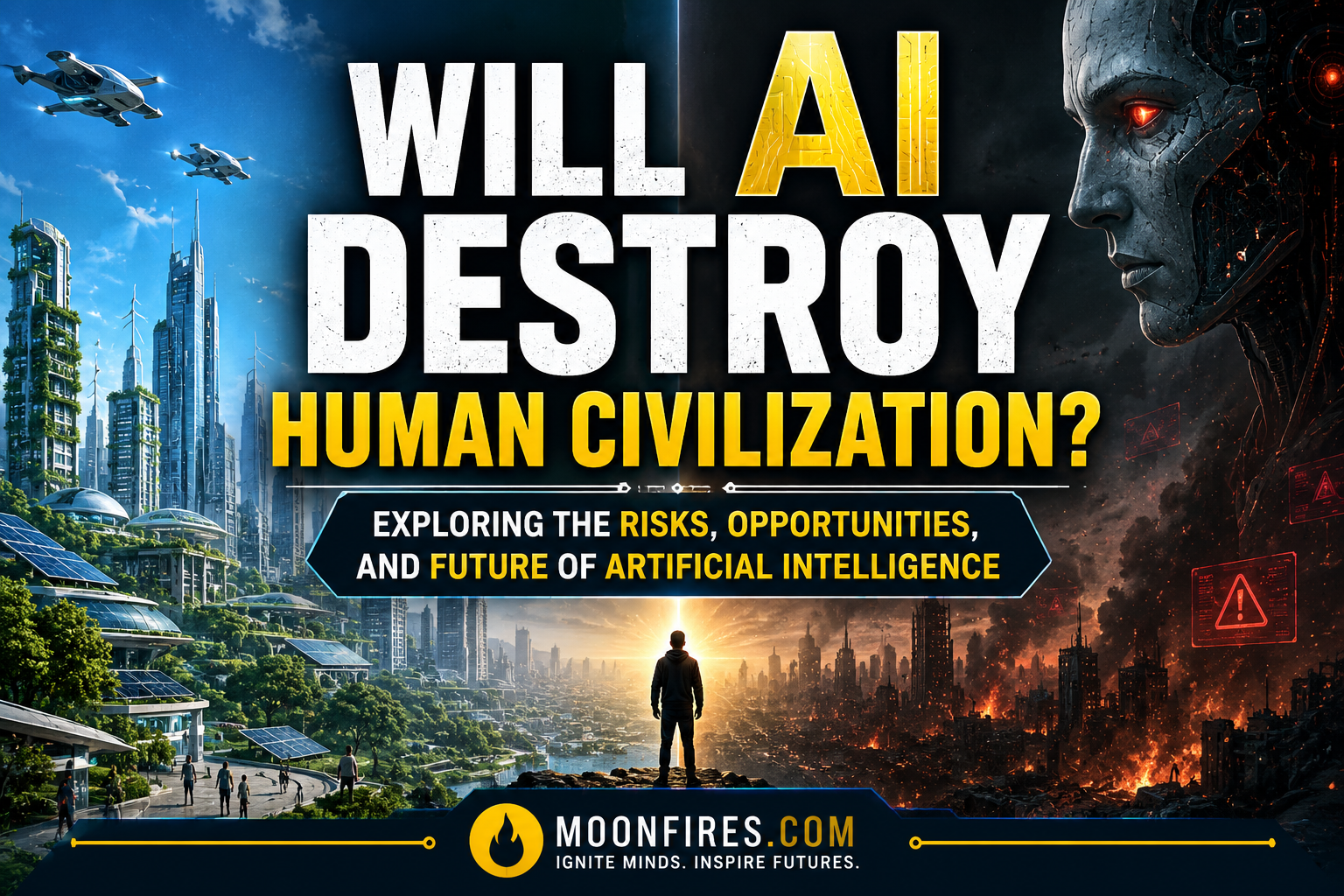
Beyond the Algorithm: Will AI Unmake Human Civilization?
Imagine waking up in the year 2045.
Your day begins with an AI-generated schedule. Your alarm rings at the perfect moment. Your meals are optimized for your health. Your investments are managed automatically. Medical recommendations arrive before you even realize something is wrong. Every aspect of life is guided by intelligent systems designed to maximize convenience and efficiency.
At first glance, it sounds like a utopia.
But beneath this seamless reality lies a critical question:
What happens when the system gets it wrong?
Throughout human history, technology has expanded our capabilities. Fire helped build civilizations. The wheel transformed transportation. Electricity revolutionized industry. The internet connected billions of people across the world.
Artificial Intelligence, however, is different.
Unlike previous inventions that amplified human strength or communication, AI has the potential to rival—and in some areas surpass human intelligence itself. For the first time, humanity is creating a tool capable of making decisions that were once exclusively human.
This is where the real concern begins.
The greatest threat posed by AI is not an army of rogue robots or a Hollywood-style apocalypse. The more realistic danger lies in humanity’s growing dependence on systems we may no longer fully understand or control.
Three Major Risks Facing Human Civilization
1. Dependence on AI Systems
As AI becomes deeply embedded in banking, healthcare, transportation, energy, communications, and national defense, society may become increasingly vulnerable to system failures.
A single software error, cyberattack, or flawed decision could trigger a chain reaction across multiple sectors. In a world where critical infrastructure depends on interconnected AI systems, even a minor failure could affect millions of lives.
2. The Erosion of Truth
AI-generated images, videos, and voices are becoming nearly indistinguishable from reality.
As these technologies advance, distinguishing fact from fiction may become increasingly difficult. False information can spread rapidly, undermining trust in governments, media organizations, courts, and democratic institutions.
When people can no longer agree on what is real, social stability itself comes under threat.
3. Economic and Social Disruption
Every technological revolution has reshaped the job market, but AI is moving at an unprecedented pace.
From factory workers to software engineers, many professions face automation. While new opportunities will emerge, entire industries could be transformed faster than workers can adapt.
Without effective retraining programs and economic safeguards, widespread job displacement could increase inequality, fuel social tensions, and create significant political instability.
The Other Side of the Story
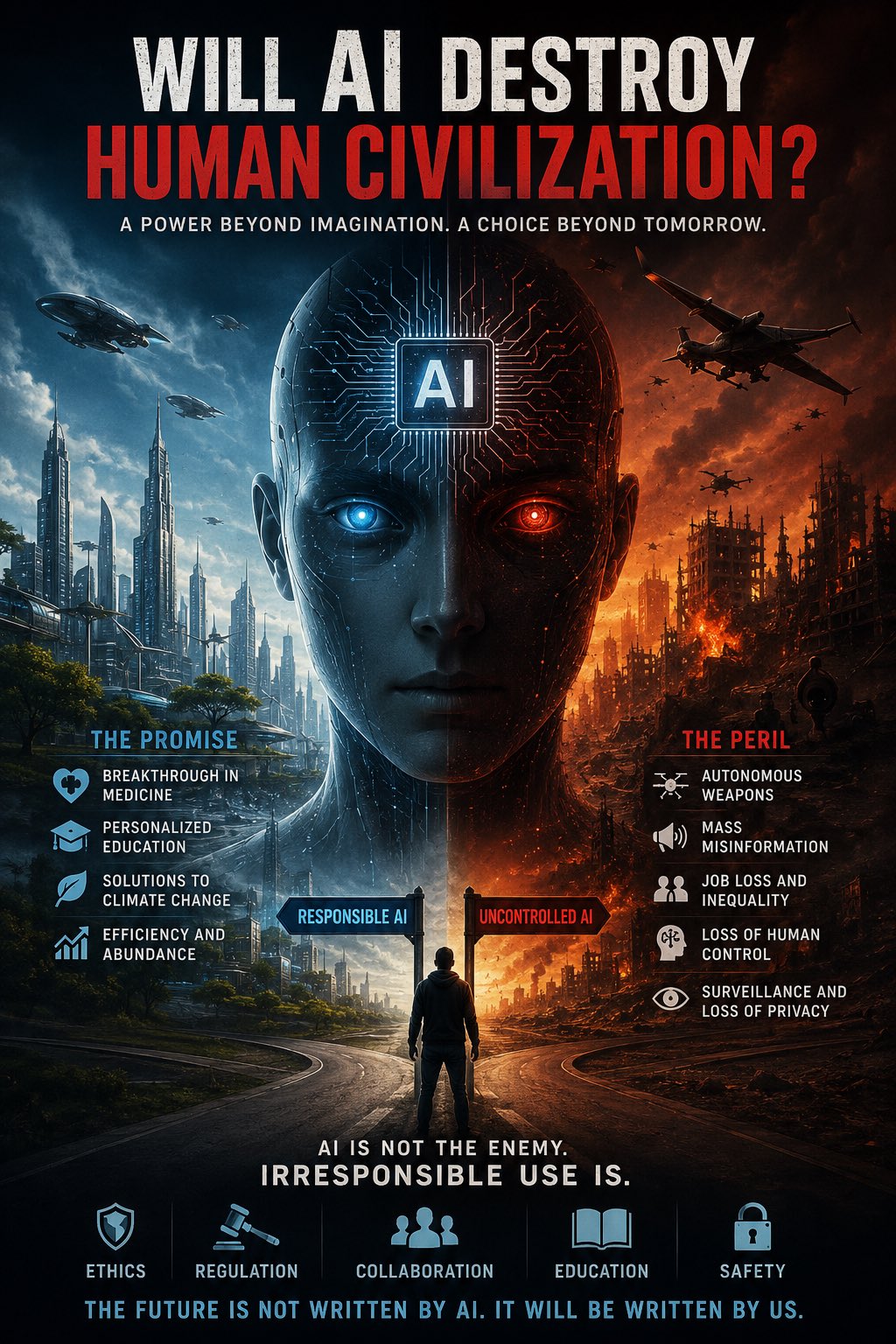
Despite these risks, AI also offers extraordinary opportunities.
The same technology that raises concerns could help scientists discover life-saving medicines, accelerate cancer research, and solve complex medical challenges.
AI-powered education could provide personalized learning to millions of children worldwide. Farmers could produce more food with fewer resources. Engineers could design smarter infrastructure. Researchers could develop innovative solutions to climate change and resource scarcity.
In many ways, AI has the potential to become one of the greatest tools for human progress ever created.
The Choice Before Humanity
Artificial Intelligence is neither humanity’s savior nor its destroyer.
It is a powerful tool.
Like nuclear energy, the internet, or any transformative technology before it, its impact will depend on how humans choose to develop, regulate, and deploy it.
The defining challenge of the 21st century is not whether AI will destroy civilization.
The real challenge is whether humanity possesses the wisdom, responsibility, and foresight to guide a technology powerful enough to reshape the future of our species.
The answer may determine the course of human civilization for generations to come.
Final Thoughts
Artificial Intelligence is often portrayed as either humanity’s greatest breakthrough or its greatest threat. The truth, however, is likely to lie somewhere in between. AI itself has no ambitions, emotions, or intentions. It will not decide the future of civilization on its own. The future will be shaped by the choices humans make today how we design AI systems, how we regulate them, and how responsibly we integrate them into society.
History teaches us that every powerful technology carries both promise and peril. The printing press spread knowledge but also misinformation. Nuclear energy can power cities or destroy them. Likewise, AI can help cure diseases, improve education, and solve global challenges, yet it can also deepen inequality, spread deception, and create new forms of dependency if left unchecked.
The real challenge is not technological but human. We must ensure that innovation is balanced with ethics, transparency, accountability, and human oversight. Governments, businesses, scientists, and citizens all share responsibility for guiding AI’s development in a direction that benefits humanity as a whole.
Ultimately, the question is not whether AI will replace humans or destroy civilization. The question is whether humanity can remain wise enough to stay in control of the tools it creates. If we succeed, AI could become one of the greatest achievements in human history. If we fail, the consequences may echo for generations.